
Henan Changxing Refractory Material Co.,Ltd.


Industry Dynamic
Providing Free technical guidance & Best Products
Emai: info@cxrefractories.com
Key Points for Using High-Alumina Refractory Bricks
The development prospects for the high-alumina refractory brick industry are excellent. Because these bricks offer significant benefits to enterprises during use, they are highly favored by customers. To help everyone gain a better understanding of this product, we will now outline the key considerations regarding the use of high-alumina refractory bricks. We hope this information proves helpful to a wide audience.
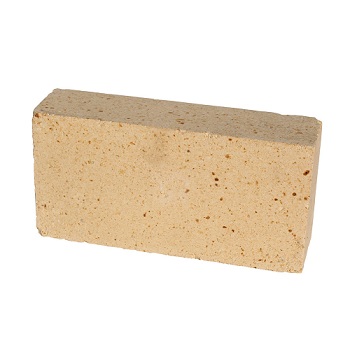
Currently, many people remain unfamiliar with the basic details of high-alumina refractory bricks. Therefore, as manufacturers, we feel it is necessary to provide a brief explanation. Essentially, high-alumina refractory bricks are a superior class of refractory material. They possess high-temperature resistance, capable of withstanding temperatures ranging from 1700°C to 1800°C, and demonstrate excellent resistance to acids, alkalis, and corrosion during operation. Furthermore, the application of high-alumina refractory bricks demands that they remain stable during heating—exhibiting no softening, expansion, shrinkage, spalling, or cracking—while maintaining robust chemical stability. It is important to recognize that these bricks now surpass traditional clay bricks in numerous refractory performance metrics. They are a versatile material known for their exceptional performance across a wide range of applications. Naturally, they are extensively utilized in the construction of various industrial furnaces. Compared to clay bricks, they effectively extend the service life of furnaces. High-alumina refractory bricks are characterized by low bulk density, low thermal conductivity, excellent thermal insulation properties, and consistent quality. They are suitable for use as either the inner lining or the insulation layer in various high-temperature furnaces. Their underlying mechanism involves a comprehensive, one-step process of molding, firing, and additive incorporation. This process—while retaining traditional foaming, blending, and casting techniques—yields a product with a uniform internal structure featuring a complementary, honeycomb-like pore network; consequently, the product exhibits consistent compressive strength and thermal insulation performance.
Additionally, you will find that high-alumina refractory bricks deliver outstanding performance, withstand extreme temperatures, and offer a long service life. They constitute a critical refractory component in industrial high-temperature furnaces. In principle, purchasing entities must be able to accurately distinguish between actual performance outcomes and the inherent quality of the high-alumina bricks relative to their specific application requirements; failure to do so can lead to the purchase of inferior products at premium prices, thereby compromising the operational lifespan of the equipment. Finally, it is worth noting that the application of high-alumina refractory bricks has become increasingly commonplace in various daily industrial operations. Their primary raw material consists of high-alumina bauxite, bonded together using refractory clay. The various constituent mixtures undergo rigorous batching and extrusion processes, followed by sintering in a tunnel kiln. Furthermore, the refractoriness (maximum temperature resistance) of high-alumina refractory bricks exceeds that of both clay bricks and semi-silica refractory bricks, typically ranging from 1750°C to 1790°C. Due to its high Al2O3 content and low impurity levels, the glassy phase is resistant to melting; consequently, its softening point is higher than that of clay bricks. However, as the mullite crystals do not form a continuous network structure, its refractoriness under load is relatively low. Given its high Al2O3 content—similar to that of neutral refractory materials—this product is capable of resisting corrosion by both acidic and basic slags. Nevertheless, owing to the presence of silicates, its resistance to basic slags is weaker than its resistance to acidic slags.
E-mail:info@cxrefractories.com
Tel:+86-371-88888998
Fax:+86-371-88886886
Address:South Tower, Greenland Central Plaza, Zhengzhou, Henan Province, China


